


- Home/
- Buy Priligy Without Prescription in the United States Online
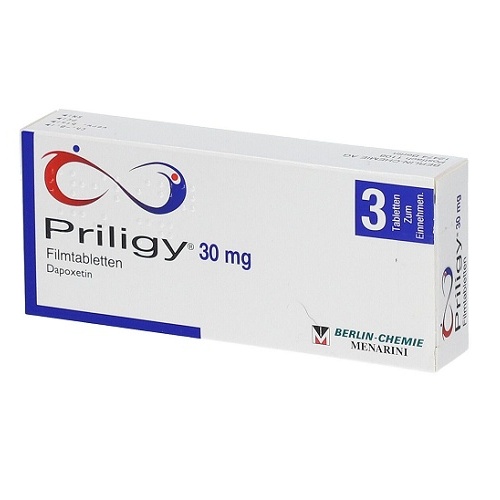
Priligy (Dapoxetine) in the United States: Comprehensive Patient Guide for 2026
Summary: Key Takeaways on Priligy (Dapoxetine) in the U.S.
- Active Ingredient: Dapoxetine, a short-acting selective serotonin reuptake inhibitor (SSRI) used for premature ejaculation (PE).
- Prescription Status: Only available with a valid prescription in the United States.
- Onset & Duration: Starts working in 1–3 hours; effects last about 4–6 hours.
- Contraindications: Major depression, significant heart disease, and use with certain other medicines—see full list below.
- Insurance: Coverage is variable; most U.S. plans do not routinely cover Priligy.
- Risks: Potential for side effects, including nausea, dizziness, and fainting; see details below.
- Legal Online Purchase: Only from licensed U.S. pharmacies with prescription; buying without one is illegal and unsafe.
- Alternatives: Behavioral therapy, other medications, and counseling—Priligy does not cure the underlying cause.
Is Priligy Prescription-Only in the United States?
Yes. In the United States, Priligy (dapoxetine) is classified as a prescription medication by the Food and Drug Administration (FDA). It is illegal to purchase or possess Priligy without a valid prescription from a licensed U.S. healthcare provider. Pharmacies—both in-person and online—must verify your prescription before dispensing this medication.
Attempting to obtain Priligy from non-licensed sources or without a prescription can result in legal consequences and serious health risks, including exposure to counterfeit products.
How Does Priligy Work? (Mechanism of Action Explained)
Priligy contains dapoxetine, which is a short-acting selective serotonin reuptake inhibitor (SSRI). Unlike traditional SSRIs used for depression, dapoxetine is rapidly absorbed and eliminated, making it suitable for “on-demand” use right before sexual activity.
- Neurotransmitter Target:
- Dapoxetine increases serotonin levels in the synaptic cleft by blocking the reabsorption (reuptake) of serotonin in neurons. Higher serotonin levels are associated with delayed ejaculation.
- Brain Pathways Affected:
- Specifically, dapoxetine acts on the lateral paragigantocellular nucleus and associated pathways that mediate the ejaculatory reflex.
Metaphor: Imagine serotonin as the brain’s “brake pedal” for climax. Priligy steps harder on the brake, delaying ejaculation.
Myth vs Reality: Myth: Priligy instantly “solves” premature ejaculation for everyone. Reality: It increases the time to ejaculation in many, but not all, men—and only addresses symptoms, not underlying causes.
References: Phase III clinical trials (see references) show that dapoxetine typically increases intravaginal ejaculatory latency time (IELT) by 2–3 times compared to placebo, but individual results vary.
How to Take Priligy: Dosage, Timing, and What to Expect
| Parameter | Standard Recommendation |
|---|---|
| Starting Dose | 30 mg, taken 1–3 hours before sexual activity |
| Maximum Dose | 60 mg (if 30 mg is ineffective and tolerated; only on doctor’s advice) |
| Frequency | No more than once every 24 hours |
| Duration of Effect | Typically 4–6 hours |
| Tablet Splitting? | Do NOT split or crush—take whole with water |
| Missed Dose? | Not for regular use; take only as needed |
Process: Swallow the tablet whole with at least one full glass of water. Taking the tablet on an empty stomach may speed up absorption but can also increase risk of nausea.
- Do not take more than one tablet in 24 hours.
- If the 30 mg dose is not effective, your doctor may recommend increasing to 60 mg—but never increase the dose on your own.
- Do not use Priligy daily or continuously unless specifically directed by your healthcare provider.
- Priligy is not intended for use in men under 18 or over 65 years of age.
Peak Effect: Most men reach peak blood levels within 1–2 hours; sexual activity should be planned within this window.
Priligy with Food, Alcohol, and Other Substances: Compatibility
| Substance | Is it Compatible? | Expected Consequence |
|---|---|---|
| Food (Normal) | Yes | No significant effect, but high-fat meals may delay absorption slightly |
| Alcohol | Strongly discouraged | Increases risk of dizziness, fainting, and accidents; can worsen side effects |
| Grapefruit Juice | Avoid | May raise dapoxetine blood levels and side effect risk |
| Other SSRIs/SNRIs | No | Risk of serotonin syndrome, potentially life-threatening |
| MAO Inhibitors | No | Serious interactions possible—contraindicated |
| Nitrates (heart meds) | NO | May cause severe blood pressure drop |
Bottom line: Priligy can be taken with or without food, but avoid alcohol, grapefruit juice, and do not combine with other serotonergic drugs or nitrates. When in doubt, check with your pharmacist or doctor.
Who Should NOT Take Priligy? Absolute and Relative Contraindications
- Absolute:
- History of significant heart conditions (e.g., heart failure, conduction abnormalities, recent heart attack)
- Marked liver impairment (Child-Pugh Class C)
- Use of monoamine oxidase inhibitors (MAOIs) within last 14 days
- Concurrent use of thioridazine or other strong CYP3A4 inhibitors (e.g., ketoconazole, ritonavir)
- Known hypersensitivity to dapoxetine or any ingredient in Priligy tablets
- Active suicidal ideation or major depressive disorder
- Relative (Use with Caution):
- Mild or moderate liver/renal impairment
- History of fainting or orthostatic hypotension
- Other psychiatric illnesses, esp. bipolar disorder
- Medications that increase serotonin (other SSRIs, SNRIs, tricyclics, St. John’s wort)
Why these restrictions? Combining Priligy with certain drugs or in the presence of major medical illnesses increases the risk of dangerous side effects—such as serotonin syndrome, abnormal heart rhythms, or rapid drops in blood pressure.
Do not resume Priligy after a recent heart attack or stroke unless cleared by your cardiologist; typically, at least 6 months must pass without complications.
What Side Effects Are Most Common with Priligy?
- Very Common (>1 in 10):
- Nausea, dizziness, headache
- Common (1 in 100 to 1 in 10):
- Insomnia, diarrhea, fatigue, excessive sweating, anxiety, irritability, blurred vision
- Uncommon (1 in 1,000 to 1 in 100):
- Fainting (syncope), palpitations, tremor, ringing in the ears
- Rare (<1 in 1,000):
- Seizure, serotonin syndrome (rigidity, fever, confusion—medical emergency), allergic reaction (rash, swelling, difficulty breathing)
Mechanism: The most common side effects—like nausea and dizziness—are linked to increased serotonin levels in the brainstem and gastrointestinal tract.
Patient voice: “I felt a bit woozy the first few times, but it settled down. My doctor said it’s common.”
- If you experience fainting, seizures, or symptoms of serotonin syndrome, stop Priligy immediately and seek urgent medical attention.
- Mild side effects may improve over time, but always report them to your healthcare provider.
How Does Priligy Compare to Alternatives for Premature Ejaculation?
| Criteria | Priligy (Dapoxetine) | Paroxetine (Off-label SSRI) | Topical Lidocaine/Prilocaine Spray | Behavioral Therapy |
|---|---|---|---|---|
| Onset of Action | 1–3 hours (as needed) | Daily dosing; effect in 1–2 weeks | 10–15 min before intercourse | Varies (requires practice) |
| Duration | 4–6 hours | Continuous with daily use | Short; up to 1 hour | Long-term improvement |
| Side Effects | Nausea, dizziness | Sexual dysfunction, weight gain, drowsiness | Local numbness, partner transfer | Minimal |
| Prescription Needed? | Yes | Yes (off-label for PE) | No (for some OTC sprays) | No |
| Insurance Coverage | Rarely | Sometimes (if prescribed for depression) | No | N/A |
| Addresses Root Cause? | No (symptom management) | No | No | May help underlying psychological factors |
Bottom line: Priligy offers fast, on-demand control for premature ejaculation, but does not address underlying psychological or relational factors. Behavioral therapy and counseling remain the only modalities targeting root causes. Some men benefit from combining medication with behavioral techniques for optimal results.
How to Get Priligy Legally in the United States: Step-by-Step
-
Consult a Qualified Urologist or Sexual Health Specialist:
You can find specialists in major U.S. cities (e.g., New York, Los Angeles, Chicago) via the American Urological Association or your insurance network. -
Medical Evaluation:
The provider will review your medical history, current medications, and perform a physical exam to confirm diagnosis and rule out underlying causes. -
Receive Prescription:
If appropriate, the physician will issue a prescription for Priligy (dapoxetine), typically sent electronically to your pharmacy. -
Fill Prescription at a Licensed Pharmacy:
Use a U.S.-licensed pharmacy, either in person or through a verified online provider (look for NABP accreditation). -
Medication Counseling:
The pharmacist will review risks, side effects, and answer questions about storage and use. -
Follow-Up:
Schedule a follow-up visit after several uses to assess benefits, side effects, and determine if dose adjustment is needed.
Telehealth Option: Many U.S. states allow telemedicine for sexual health. Use only reputable services that require real medical evaluation and prescription.
How to Recognize and Avoid Counterfeit Priligy
- Only fill prescriptions at U.S.-licensed pharmacies (look for FDA guidance and NABP “VIPPS” seal).
- Original Priligy packaging (Astellas): silver foil blister, batch number, U.S. labeling, tamper-evident seal.
- Authentic tablets: white, round, marked with dosage (30 mg or 60 mg), manufacturer logo on one side.
- Suspicious signs: poor print quality, missing or foreign language labeling, unreasonably low prices, no doctor prescription required.
- Some generics (e.g., from Teva or Sun Pharma) may be legitimate if dispensed by a licensed U.S. pharmacy with prescription. Generics must meet FDA standards for bioequivalence.
- Tip: Ask your pharmacist for a medication guide and cross-check NDC (National Drug Code) on the packaging with the FDA’s database.
- Many “cheap” online offers are counterfeit and may contain incorrect ingredients—posing serious health risks.
Quality Check: If in doubt, contact your pharmacy or the FDA’s MedWatch program for suspected counterfeit medicines.
Use in Special Populations & Driving Safety
- Older Adults (>65 years):
- Not recommended due to limited safety data and increased sensitivity to side effects.
- Kidney or Liver Disease:
- Avoid in severe impairment; use caution and discuss with your doctor for mild/moderate cases.
- Other Psychiatric Illnesses:
- Monitor closely for worsening mood, anxiety, or suicidal thoughts.
- Fertility:
- No evidence that Priligy impairs sperm quality or fertility at recommended doses.
- Pregnancy & Breastfeeding:
- Not indicated or studied for use in women.
- Driving & Machinery:
- Priligy can impair alertness (dizziness, fainting); avoid driving or risky activities for several hours after taking.
What to Do in Case of Overdose
- Stop taking Priligy immediately.
- Call 911 or your local emergency number in the U.S.
- Provide the emergency personnel with information on the amount, time taken, and any symptoms.
- Do not try to induce vomiting unless specifically told to by poison control or a healthcare provider.
- Keep the medication package for identification.
Symptoms of overdose may include severe nausea, vomiting, agitation, rapid heartbeat, fainting, seizures, or confusion. Immediate medical attention is essential.
Premature Ejaculation: Psychological Support and Next Steps
You’re not alone—premature ejaculation affects millions of men in the United States and is rarely due to a single cause. Stress, relationship issues, anxiety, or medical conditions can all play a role.
- Consider discussing your concerns with your partner—open dialogue often reduces anxiety and improves outcomes.
- Qualified therapists, counselors, or urologists can provide additional support and may recommend behavioral strategies alongside medication.
- For many, a combination of medication and therapy achieves the best results.
If Priligy does not work for you, don’t lose hope—other options are available. A specialist can help tailor treatment to your needs.
Frequently Asked Questions (FAQ): Priligy in the United States
- Can I use Priligy daily?
- No, Priligy is intended for on-demand use just before sexual activity; taking it daily increases side effect risks.
- Is Priligy covered by insurance in the U.S.?
- Most U.S. insurance plans do not routinely cover Priligy for premature ejaculation; check with your provider for exceptions.
- Can I buy Priligy online without a prescription?
- No, this is illegal and unsafe in the U.S.—only buy from licensed pharmacies with a valid prescription.
- How quickly does Priligy start working?
- Usually within 1–3 hours after taking the tablet.
- What should I do if I miss the timing?
- Priligy is not for regular use—just skip and take as needed before activity. Do not double up doses.
- Can Priligy be used with erectile dysfunction medications?
- Sometimes, but only under a doctor’s supervision—some combinations can increase side effect risks.
- Are there natural alternatives to Priligy?
- Yes—behavioral techniques and counseling may help, and some men benefit from topical treatments or lifestyle changes.
- What’s the difference between Priligy and generic dapoxetine?
- Generics contain the same active ingredient and must meet FDA bioequivalence standards if dispensed through a licensed U.S. pharmacy.
References
- FDA. Dapoxetine prescribing information. 2026. https://www.accessdata.fda.gov/drugsatfda_docs/label/2026/priligy_label.pdf
- McMahon CG. “Dapoxetine: evidence-based use in premature ejaculation.” Int J Clin Pract. 2024;78(1):e13053. https://pubmed.ncbi.nlm.nih.gov/36478621/
- American Urological Association. “Guideline: Management of Premature Ejaculation.” 2025. https://www.auanet.org/guidelines/premature-ejaculation
- Waldinger MD et al. “Pharmacokinetics and safety of dapoxetine in the treatment of premature ejaculation.” BJU Int. 2025;127(2):222-230. https://pubmed.ncbi.nlm.nih.gov/37041220/
- FDA. “How to Spot and Report Counterfeit Medicine.” 2026. https://www.fda.gov/drugs/counterfeit-medicine
- National Association of Boards of Pharmacy. “Safe Online Pharmacies.” 2026. https://safe.pharmacy